A practical guide to the areas UK prize competition and raffle website operators should consider when preparing competition terms and conditions.
Terms and conditions are not the most exciting part of a competition website. But they are one of the most important.
Clear terms help customers understand what they are entering, how winners are selected, what happens if something changes and what responsibilities sit with the operator.
They also help operators avoid confusion when handling refunds, extensions, prize alternatives, complaints or free entries.
This guide explains the areas competition operators should consider when preparing or reviewing their terms.
Not legal advice
This article is for general information only and does not constitute legal advice. Operators should take legal advice based on their own circumstances.
Competition terms should be clear, visible and aligned with how the business actually operates.
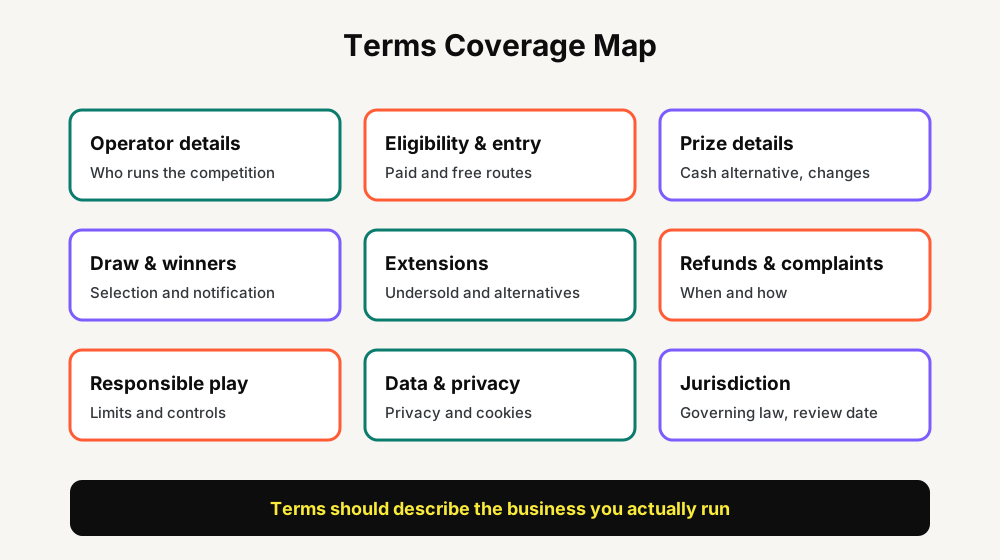
They should cover eligibility, entry routes, free entry, prize details, draw process, winner selection, extensions, alternatives, refunds, complaints, data use and responsible play.
Terms should not be copied blindly from another operator.
Terms are a trust document as much as a legal document.
Customers may not read every line, but they expect important rules to be clear and available.
Payment providers, advertising platforms, partners and industry bodies may also review terms when assessing the business.
Weak or vague terms can make the operator look less professional.
Terms should identify the operator clearly. Include the business name, contact route and relevant company details where appropriate.
Operators should explain who can enter. This may include age restrictions, location restrictions, staff exclusions and any other eligibility rules.
Explain how customers enter. Where a free entry route exists, explain it clearly and make sure the terms match the actual process.
Many people may search for "raffle terms" or "online raffle rules", but the terms should still use accurate legal language around prize competitions, free draws and entry routes.
Terms should explain what the prize is, whether a cash alternative is available and what happens if the advertised prize becomes unavailable.
Explain when and how winners are selected. Include enough detail that a customer can understand the process.
Explain how winners are contacted, how long they have to respond and what happens if they do not respond.
If the operator may extend a competition, offer an alternative prize or cancel in certain circumstances, this should be covered clearly.
Do not wait until a competition undersells to decide what the terms mean.
Set out when refunds may apply, how complaints are made and how they are reviewed.
Terms should sit alongside responsible play information, especially where operators offer limits, account closures or self-exclusion style controls.
Operators should explain how customer data is handled and link to privacy and cookie policies. The ICO's UK GDPR guidance is a useful reference here.
Legal clarity does not require unreadable wording. Customers should be able to understand the key rules without needing a lawyer.
Use headings, short paragraphs and plain English summaries where helpful. The ASA CAP Code on sales promotions is worth reviewing when drafting any marketing claims.
Terms should describe the business you actually run.
That sounds obvious, but many operators treat terms as a copied document that sits separately from operations. That is risky.
The terms, platform setup, customer journey and support process should all align. If they do not, the operator creates avoidable confusion.
Operator details
Eligibility
Paid entry route
Free entry route
Prize details
Cash alternative
Draw date
Winner selection
Winner notification
Extensions
Alternative prizes
Refund process
Complaints process
Responsible play
Privacy and cookies
Marketing claims
Jurisdiction
Review date
No. Terms should reflect the operator's own business model, prize structure, processes and legal advice.
Yes, where relevant. They should also be visible and explained clearly on the website.
Usually only as explanatory common language if needed. The legal structure should be described accurately. The Gambling Commission's guidance on free draws and prize competitions is a helpful starting point.
No. Terms help, but compliance depends on the full structure and operation of the business. The Voluntary Code of Good Practice for Prize Draw Operators sets out wider expectations.
Build terms that match how you actually operate
Create a free BaseComp account and explore how structured competition setup can support clearer terms and operations. No card required.
Get the latest tips, product updates, and industry news delivered to your inbox. No spam, unsubscribe any time.